Get Your Ship Together: Why the Right 3PL Matters
Faith Artieda • April 13, 2026

Your 3PL isn’t just a vendor—it’s a critical extension of your business. The right partner ensures orders ship on time, keeps inventory accurate, and delivers on customer expectations. Strong fulfillment disappears into the background, but failures are immediate and disruptive.


When issues like late shipments and inventory snags accumulate, fulfillment becomes a stumbling block rather than a support system. Choosing the right 3PL is what prevents these problems from derailing your business.

You Usually Don’t Notice… Until You Do

On paper, fulfillment seems straightforward: products come in, orders go out. But real life is messier. Volumes fluctuate, new channels emerge, customer expectations rise, and retail requirements become more stringent. Sometimes, all these pressures hit at once.


That’s when the true nature of your 3PL partner emerges. Mary Glen from our Customer Solutions team has observed this trend across many operators, especially those using robotics. The best teams aren’t just tech-savvy; they’re able to keep operations running smoothly when things get complicated. That’s rarer than you might think.


It’s Not Really About Price

Most 3PL discussions start with pricing or a checklist of capabilities. But that’s not what makes a partnership work.


As Mary puts it: “We don’t lead with pricing and capabilities—we lead with understanding the problems.”


Most companies aren’t just seeking someone to pick and pack orders. They’re looking for solutions to real challenges: space constraints, expansion into new markets, integration of new sales channels, and meeting rising service expectations. If your 3PL doesn’t understand these issues, they won’t be able to support your growth.


Fulfillment Gets Complicated Fast

It’s tempting to view fulfillment as a set of simple tasks. But as you scale, it becomes a complex coordination problem.

Inventory, systems, transportation, compliance, labor, all these elements need to stay in sync. When one slips, it can disrupt everything.


Mary sums it up: “Fulfillment isn’t just picking and packing—it’s how all the moving pieces stay coordinated as your business scales. That’s where things either hold together or start to unravel.”


That’s what separates top operators from the rest.


What It Looks Like When It Works


With the right 3PL, operations run seamlessly. Orders ship on time, inventory is accurate, and retail partners aren’t flagging issues.


Your team isn’t stuck in firefighting; you feel in control. That stability lets you focus on growing the business, not just fixing it.


Quick Look Behind the Scenes

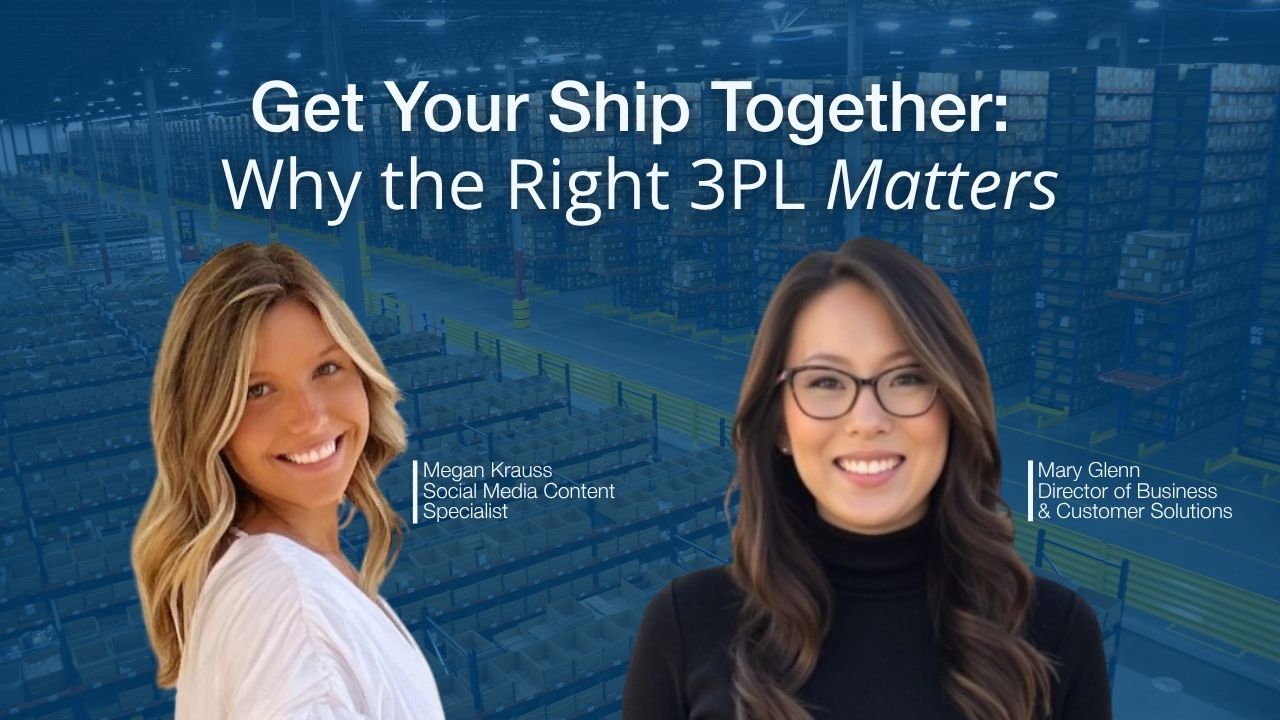
Megan Krauss, our Social Media Specialist, collaborates with teams across Barrett to showcase the reality of our operations, partnerships, and people—without the polish or script.


Her goal is to highlight what real execution looks like, from supporting customers to working on the warehouse floor. She recently produced a short video offering a behind-the-scenes look at how we approach partnership, problem-solving, and smooth scaling. 

In the End…

As your business grows, fulfillment doesn’t get easier; it gets more complex. The real question: does your 3PL help you handle that complexity, or add to it? Because at the end of the day, it’s not just about moving products, it’s about keeping your operation together as things change.

Recent Blog Posts
By Faith Artieda July 3, 2026
As businesses grow, managing inventory, shipping orders, and meeting customer expectations becomes increasingly complex. That's where a third-party logistics provider, or 3PL , can make a significant difference.  A 3PL is a company that manages some or all of your supply chain operations, including warehousing, order fulfillment, transportation, inventory management, and value-added services. Instead of investing in your own warehouse, technology, and fulfillment staff, you partner with a logistics expert that has the infrastructure and expertise already in place. So, how do you know if it's time to make the switch? If your team is spending more time packing orders than growing the business, struggling to keep up with demand, or facing rising shipping costs, partnering with a 3PL may be the next step. Businesses also turn to 3PL providers when expanding into new markets, launching new sales channels, or looking to improve delivery speed without increasing overhead. The right 3PL does more than store inventory. It becomes an extension of your business, providing the technology, visibility, and operational support needed to scale efficiently. Features like real-time inventory tracking, transportation management, retail compliance, and value-added services help streamline operations while improving the customer experience. At Barrett Distribution, we provide customized third-party logistics solutions backed by more than 80 years of experience. Our nationwide network of strategically located fulfillment centers supports both B2B and direct-to-consumer operations, allowing customers to reach more consumers faster while maintaining inventory accuracy and operational efficiency. With advanced warehouse management technology, transportation solutions, and a dedicated customer support team, Barrett helps businesses simplify logistics so they can focus on growth. Whether you're a fast-growing ecommerce brand or an established manufacturer looking to optimize your supply chain, partnering with the right 3PL can reduce costs, improve service, and position your business for long-term success.
By Faith Artieda July 1, 2026
As your business grows, the warehouse that once supported your operations may start holding you back. What worked when you were shipping a few hundred orders a week may no longer be able to keep pace with rising order volumes, expanding sales channels, or increasing customer expectations. Recognizing the warning signs early can help you avoid fulfillment disruptions, rising costs, and dissatisfied customers. Here are seven indicators that it may be time to evaluate a new warehouse or 3PL partner. 1. Orders Are Taking Longer to Ship Today's customers expect fast, reliable delivery. If order processing times are increasing or you're struggling to meet shipping deadlines, your warehouse may have reached its capacity. Delays can impact customer satisfaction, retailer scorecards, and your brand's reputation. At Barrett Distribution, our facilities are supported by advanced warehouse management technology and engineered processes designed to maintain fast, accurate fulfillment as order volumes grow. 2. Inventory Accuracy Is Becoming a Challenge Frequent inventory discrepancies, stockouts, or overselling are often signs that your current operation lacks the systems and controls needed to scale. Modern warehouses should provide real-time inventory visibility, robust cycle counting programs, and reliable lot and expiration tracking where required. Barrett combines these inventory controls with customer reporting and analytics to help businesses make informed supply chain decisions. 3. You're Selling Across More Channels Many businesses now serve retailers, ecommerce customers, marketplaces, and wholesale distributors simultaneously. If your warehouse struggles to manage different order requirements, routing guides, or compliance standards, it may not be equipped for true omnichannel fulfillment. Barrett specializes in supporting both B2B and direct-to-consumer fulfillment from the same network, helping brands maintain consistent service levels across every sales channel. 4. Your Warehouse Can't Scale with Seasonal Demand Peak seasons shouldn't require scrambling for labor or turning away business. A warehouse partner should have the space, workforce, and operational processes to scale alongside your business during promotions, product launches, and holiday demand. With more than 6 million square feet of warehouse space across multiple U.S. markets, Barrett provides customers with the flexibility to grow without constantly worrying about capacity constraints. 5. You Have Limited Visibility into Your Operations If you're relying on spreadsheets or waiting for someone to send reports, you're missing valuable opportunities to improve performance. Today's logistics operations should provide real-time access to inventory, order status, shipping metrics, and key performance indicators. Barrett's customer portal and embedded analytics give customers greater visibility into their operations, helping them identify trends and make data-driven decisions. 6. Transportation Costs Continue to Rise Your warehouse location has a direct impact on shipping costs and delivery times. If you're shipping nationwide from a single facility that no longer aligns with your customer base, transportation expenses can quickly increase. Barrett's nationwide fulfillment network allows businesses to position inventory closer to customers, reducing transit times while helping optimize parcel and freight costs. 7. Your 3PL Feels Like a Vendor, Not a Partner Perhaps the biggest sign you've outgrown your current warehouse is the relationship itself. A strong 3PL should do more than process orders—it should proactively recommend improvements, communicate regularly, and help your business adapt as it grows. At Barrett, every customer is supported by dedicated operations teams, strategic account management, and a culture of continuous improvement. From onboarding through ongoing optimization, the focus is on building long-term partnerships that evolve alongside each customer's business. Is It Time to Reevaluate Your Fulfillment Strategy? Growth is a good problem to have—but only if your logistics operation can keep up. If any of these signs sound familiar, it may be time to assess whether your current warehouse is supporting your long-term goals.  With more than 80 years of experience, a nationwide network of strategically located facilities, advanced technology, and expertise across ecommerce, retail, and omnichannel fulfillment, Barrett Distribution helps businesses scale with confidence. The right warehouse partner doesn't just store inventory—it becomes an extension of your business, helping you deliver a better experience to your customers every step of the way.
By Faith Artieda June 30, 2026
When businesses think about major U.S. logistics hubs, cities like Los Angeles, Chicago, and Dallas usually come to mind. However, Memphis has quietly become one of the country's most strategic locations for distribution. Its central geography, world-class transportation infrastructure, and access to major parcel networks make it an ideal location for companies looking to improve delivery speed while controlling costs.  For businesses with customers across the country, Memphis offers a unique advantage. Its location allows products to reach much of the U.S. within one to two days by ground, helping brands reduce transit times without the complexity of operating multiple distribution centers. As customer expectations for faster shipping continue to rise, a centrally located warehouse can make a measurable difference in both service levels and transportation spend. A key reason Memphis stands out is its role as home to the FedEx World Hub. The city's direct connection to one of the largest air cargo operations in the world supports faster parcel movement, later shipping cutoffs, and greater flexibility for ecommerce and omnichannel fulfillment. Combined with major interstate highways, rail service, and Mississippi River access, Memphis provides businesses with multiple transportation options that strengthen supply chain resilience. Beyond transportation, Memphis remains an attractive market because of its competitive operating costs. Warehouse space, labor availability, and room for expansion often make it a more economical choice than many coastal markets. For growing companies, this creates an opportunity to scale operations without significantly increasing logistics costs. At Barrett Distribution, we've recognized the strategic value of Memphis for years. Our five Memphis-area facilities are designed to support both B2B and direct-to-consumer fulfillment, allowing customers to serve retail partners, ecommerce shoppers, and marketplaces from a centrally located network. Backed by advanced warehouse management technology, transportation management systems, real-time inventory visibility, and value-added services, our Memphis operations help customers improve efficiency while maintaining the flexibility to grow. For brands looking to strengthen their national distribution strategy, Memphis offers a compelling combination of speed, connectivity, and scalability. Paired ÒÁÈËÖ±²¥'s nationwide network of fulfillment centers, businesses can build a distribution strategy that shortens delivery times, reduces transportation costs, and positions them for long-term growth.
More Posts